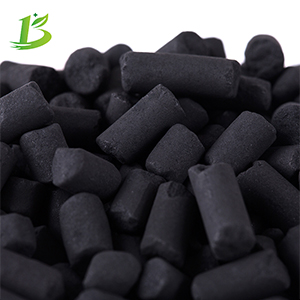
Crushed Briquette Activated Carbon for Efficient Water Treatment
Publish Time: 2025-09-26 11:09:00
Inquire
Crushed briquette activated carbon gets its name from the unique process that includes grinding and pelletizing steps. Typically, it is produced by blending multiple coal types with different pore structures in specific ratios. In some cases, chemical additives are also used to modify the pore distribution. Rarely, single-coal production methods are employed.
Compared to raw coal-based crushed carbon and extruded columnar activated carbon, crushed briquette carbon offers a more rational pore distribution. By adjusting the blending of coal types, it is possible to produce activated carbon with well-developed macropores and high molasses adsorption values, making it suitable for applications requiring the adsorption of large molecules. In addition, crushed briquette carbon features zero floating, high mechanical strength, and excellent regenerability, with higher recovery rates during regeneration.
Production Process & Specifications:
Common Particle Sizes: 4–8 mesh, 8–30 mesh, 12–40 mesh, 30–60 mesh
Adsorption Values:
Iodine Number: 900–1100 mg/g
Methylene Blue Value: 150–240 mg/g
High molasses adsorption types can also be produced, reaching values above 240 mg/g
Currently, crushed briquette activated carbon is widely used in the water treatment industry. Organic compounds in water vary in molecular size and are rarely uniform, requiring activated carbon with pores of different sizes for effective adsorption. Thanks to its well-balanced pore structure, crushed briquette carbon ensures superior purification performance, making it a reliable choice for diverse water treatment applications.